Marriage Biodata Maker
Beautiful Templates That Stand Out
Make a marriage biodata families actually notice. Choose a beautiful template, add your details, and create your biodata in minutes.
- Free to build and preview
- No account, no sign-up
- English, Marathi, Hindi & more
- PDF, Image & Editable Word
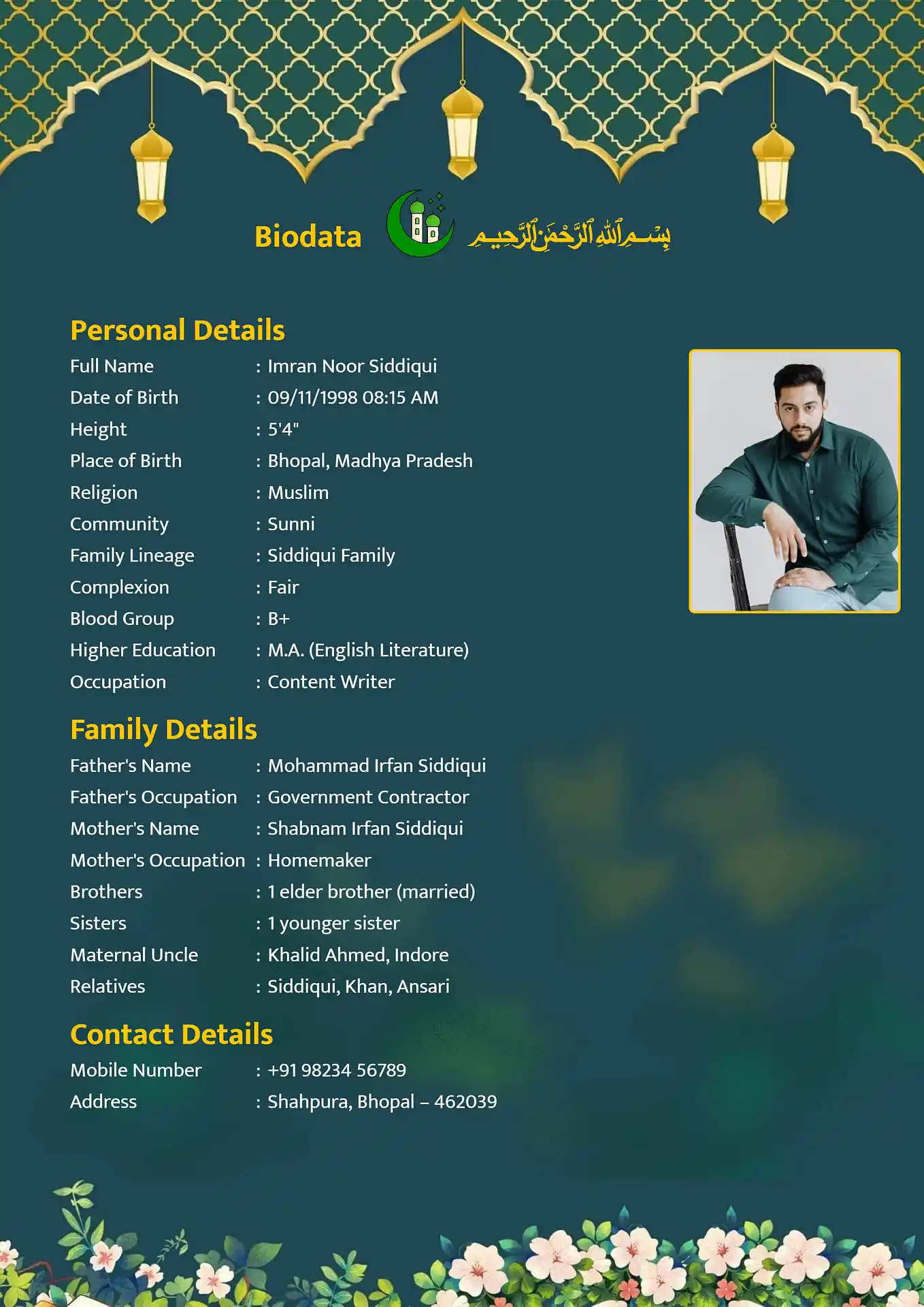
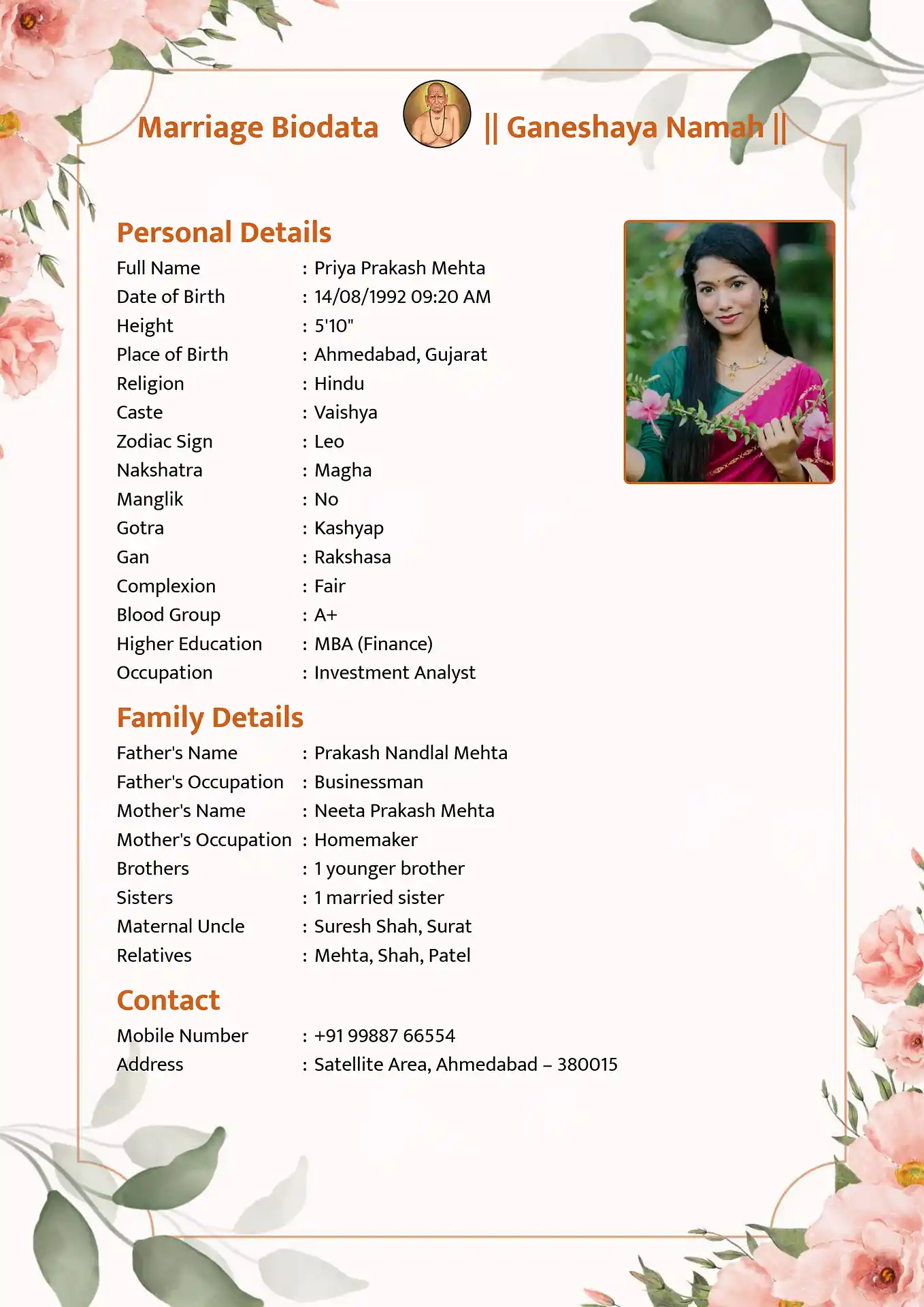
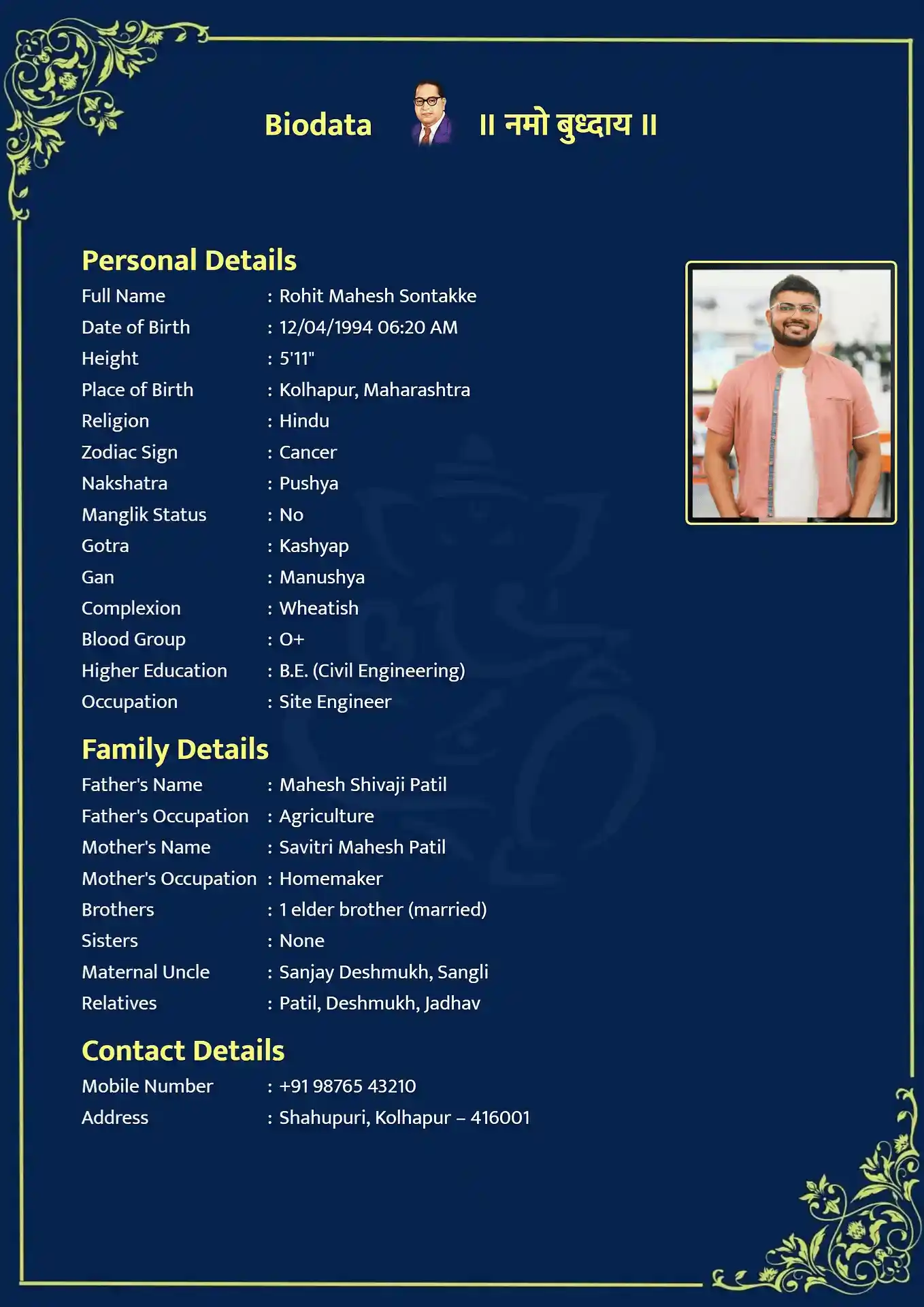
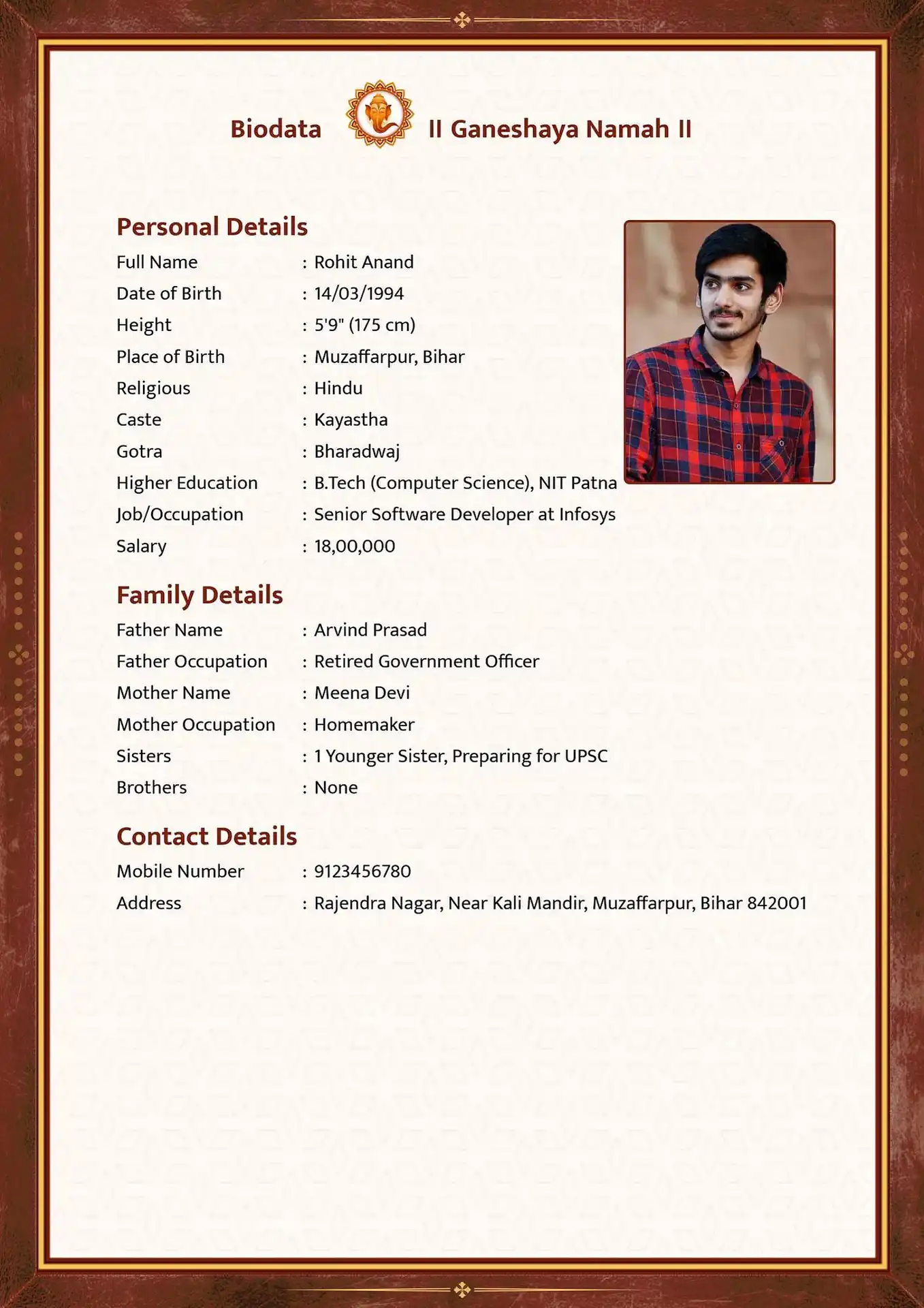
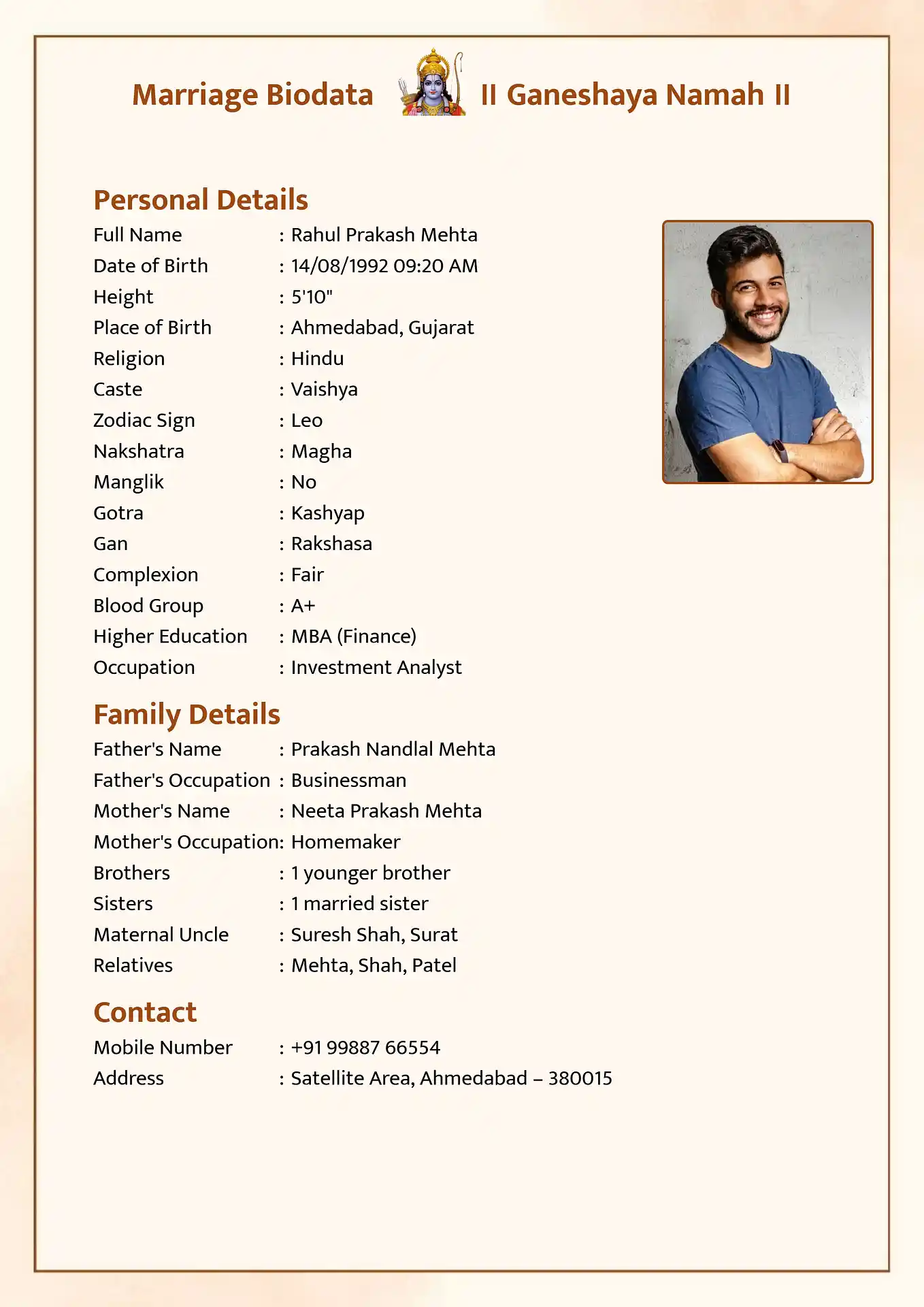
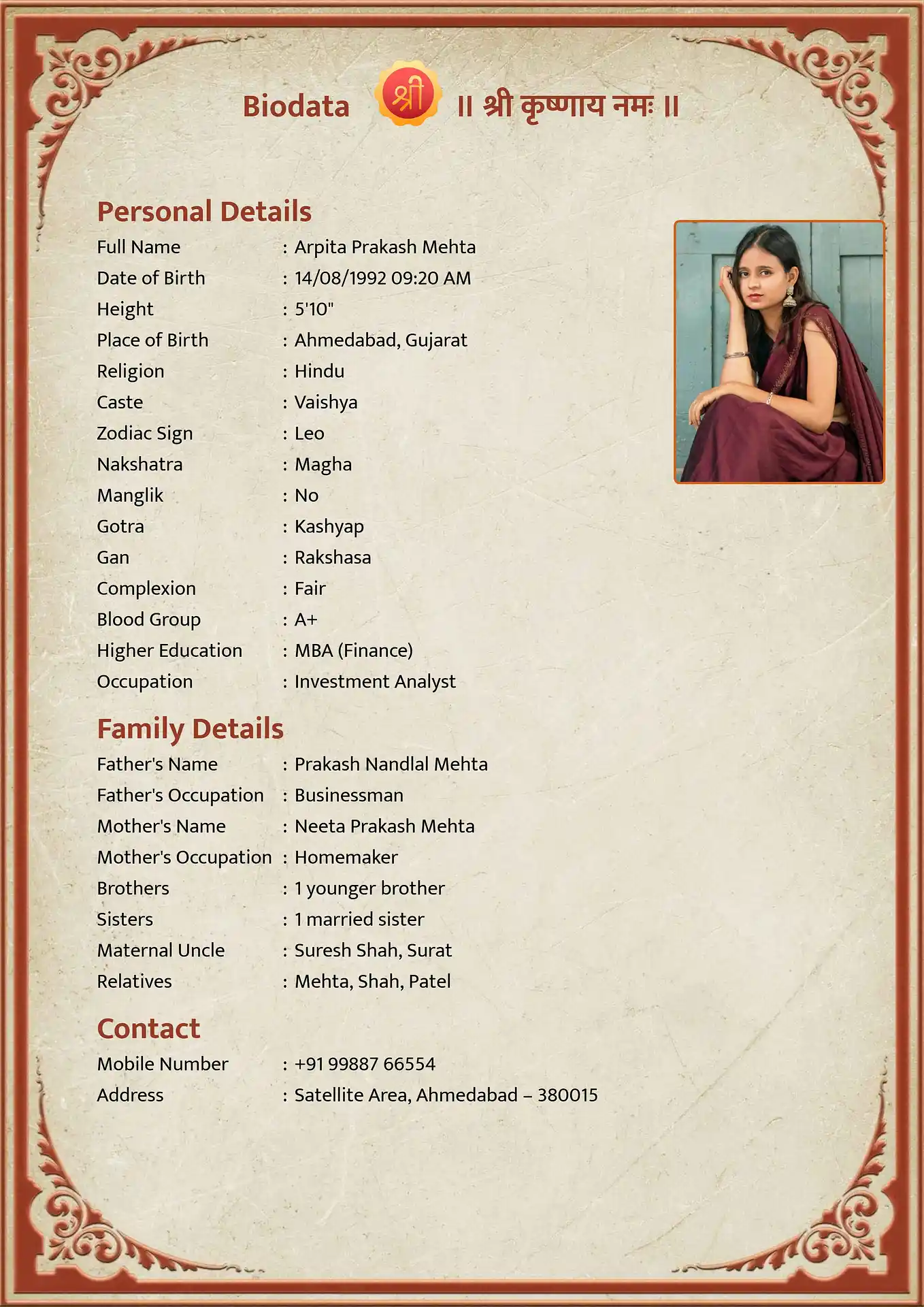
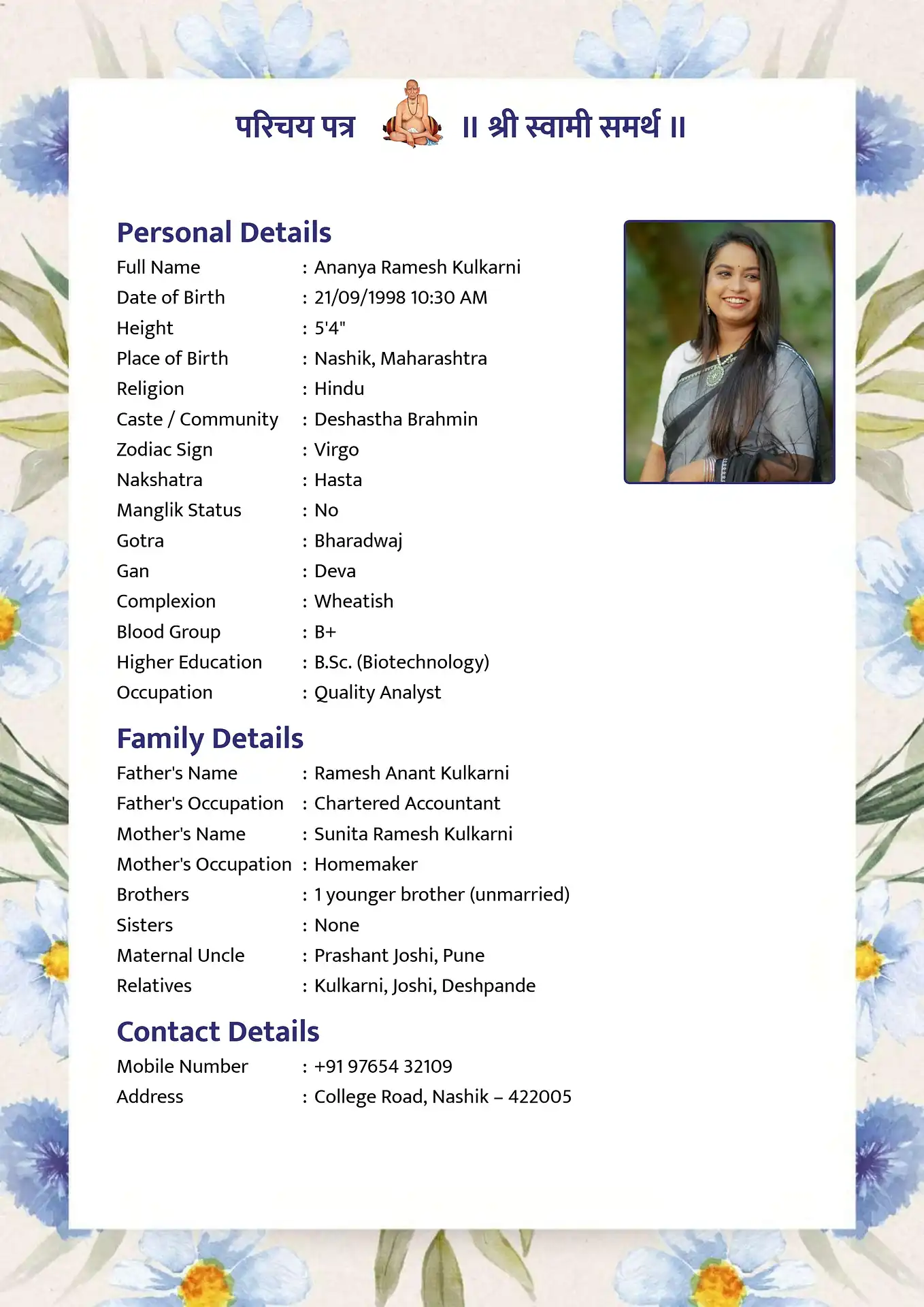
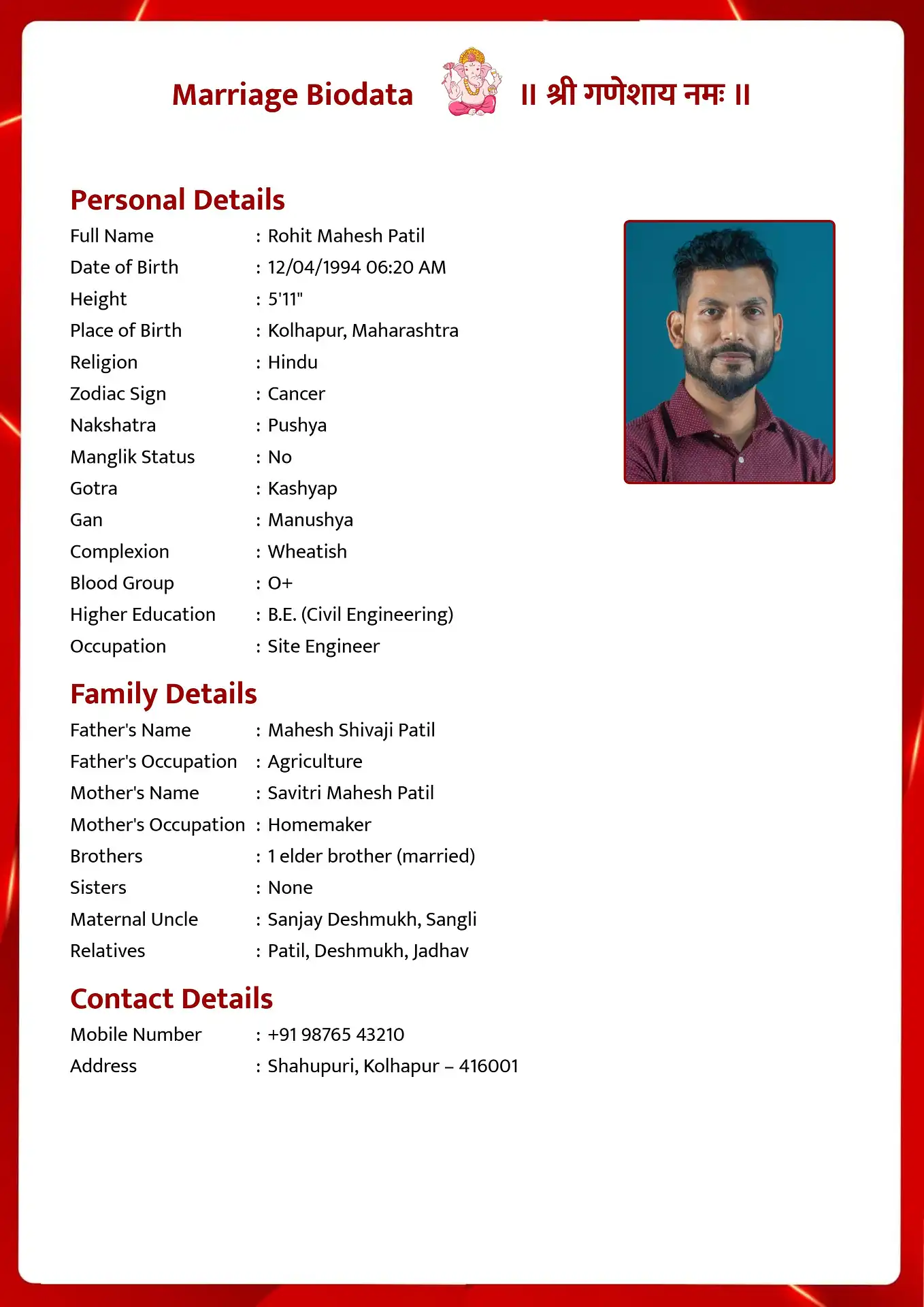
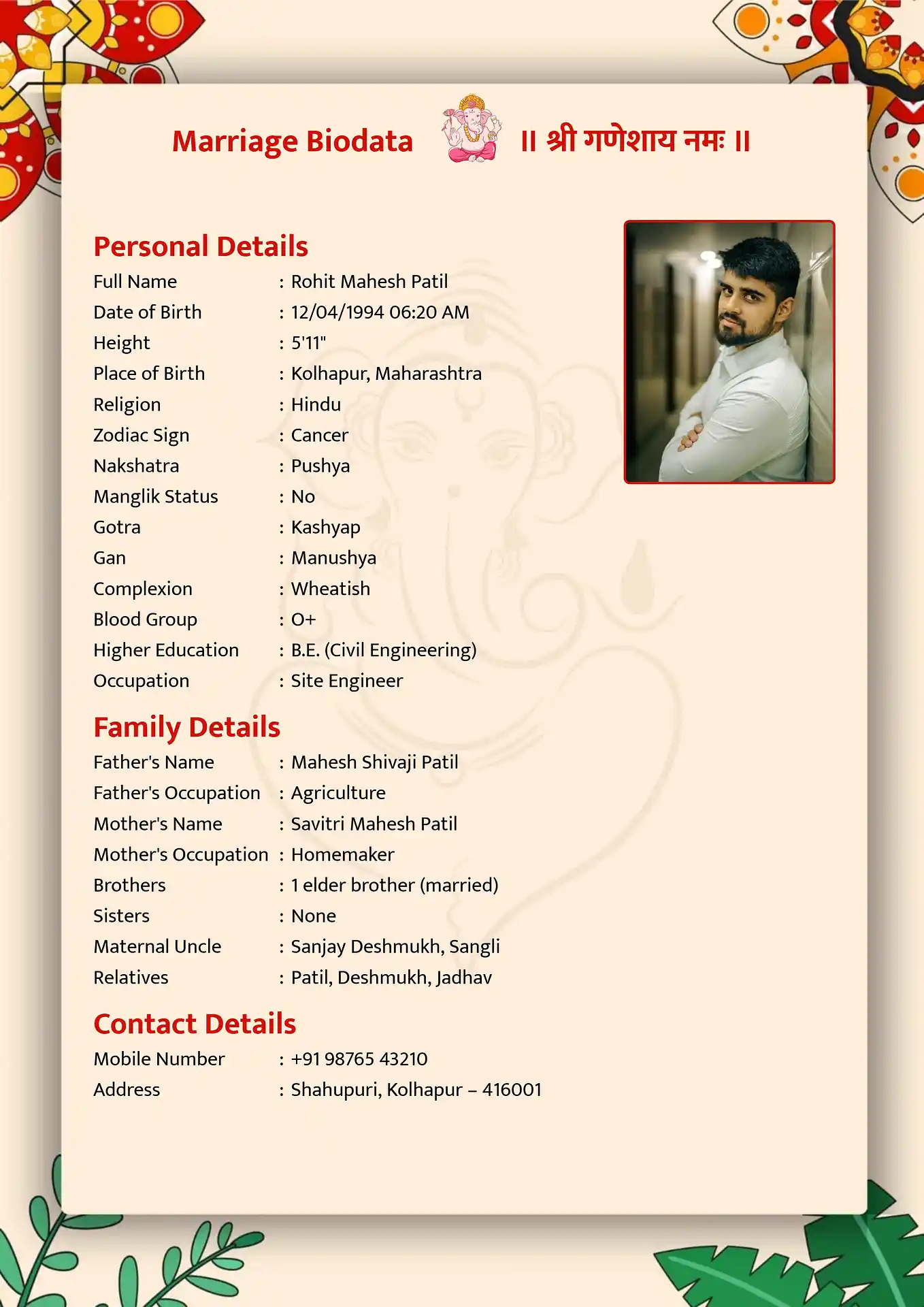
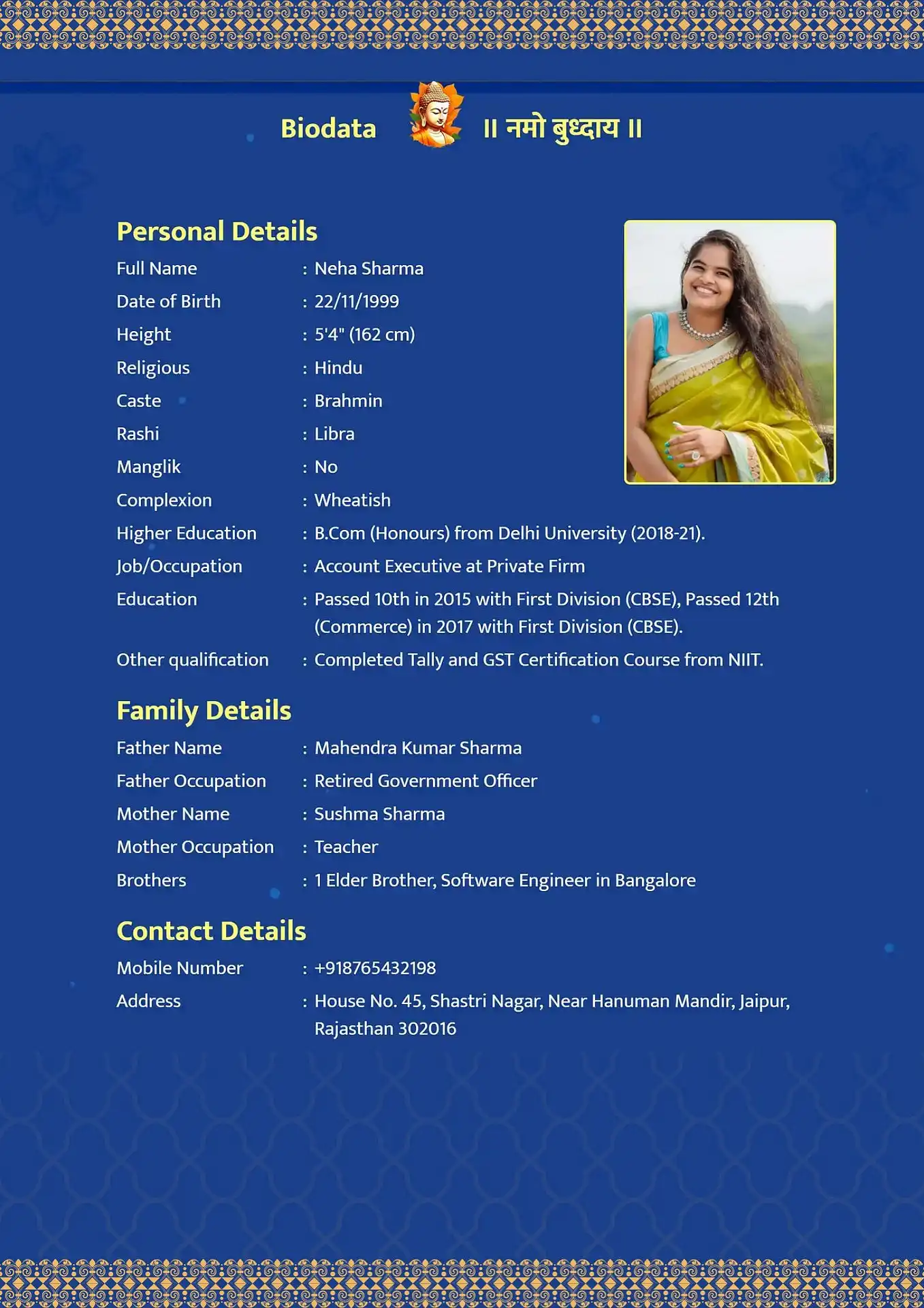
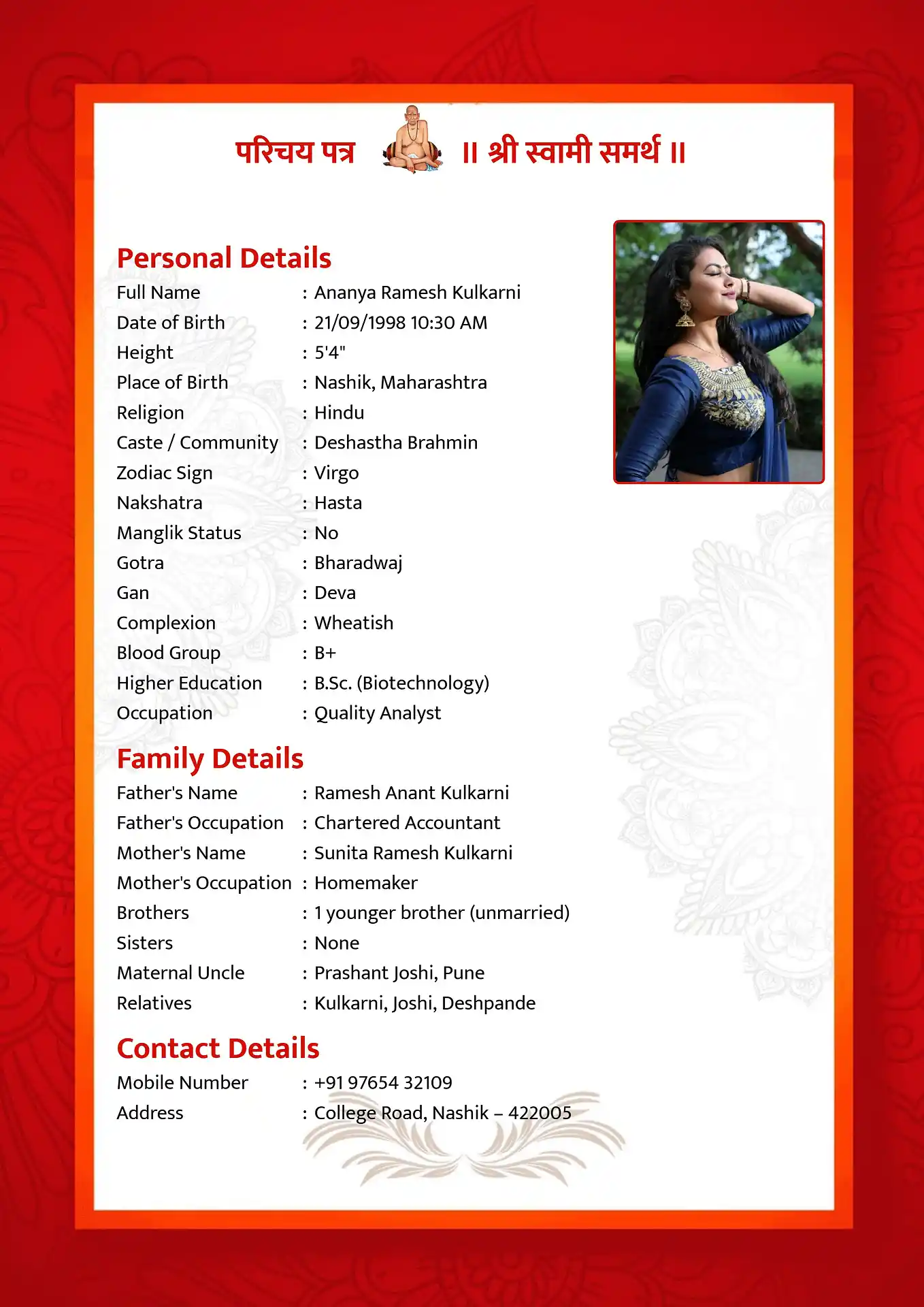
Every Style Covered in PDF + Image + Word
Traditional, classic and plain modern designs, including layouts built for Muslim, Sikh and Jain families. Pick one to start with. You can switch to a different template at any point before you download.
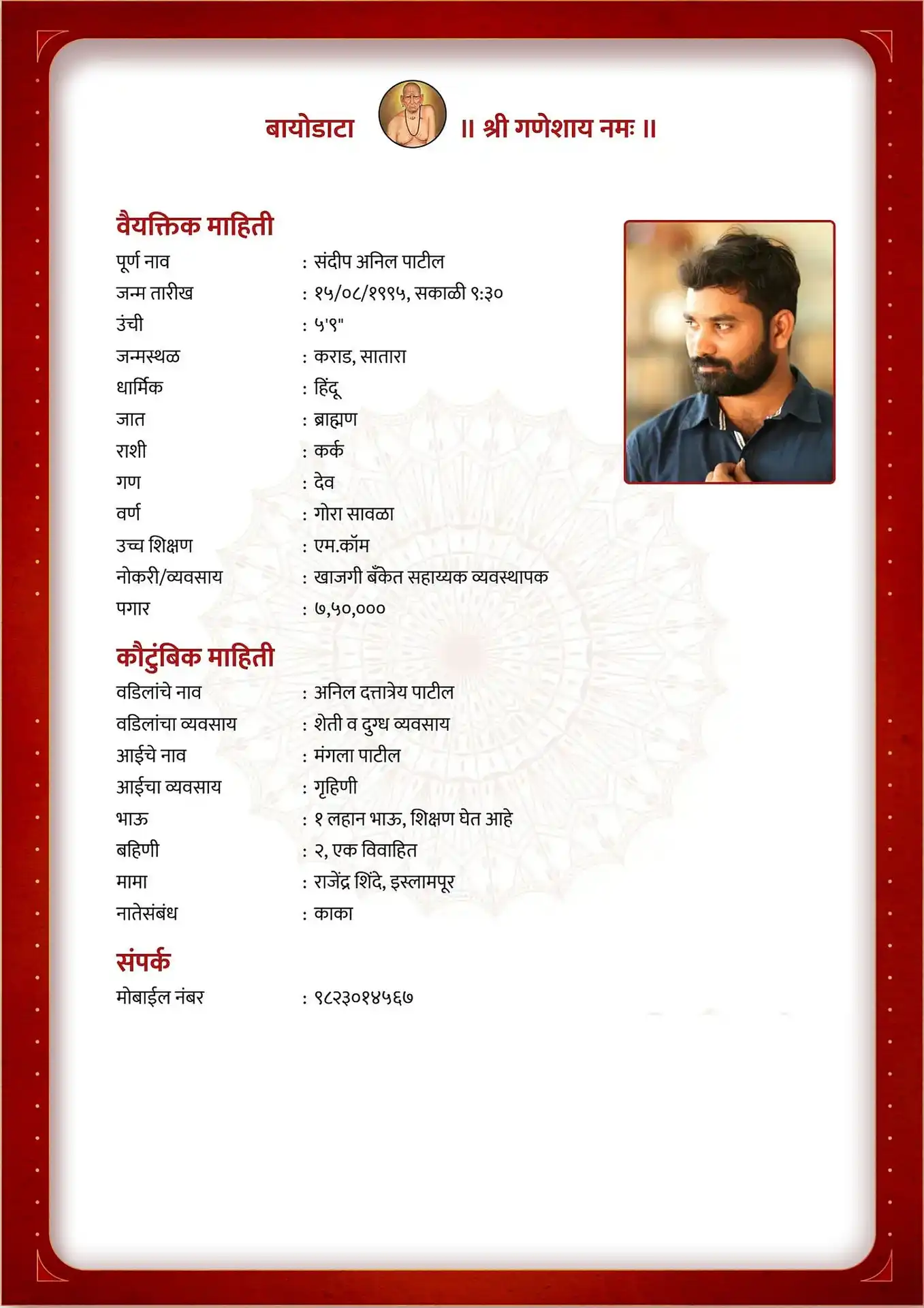
Create Marriage Biodata
Fill in your details, upload your photo, choose a template and download a print-ready PDF or Word file in under 5 minutes.
Choose your language
Biodata Title
God Name
Choose your photo
Upload your profile photo, biodata with photos get more attention.
Photo Tips
- • Use a clear, recent photo with good lighting
- • Face should be clearly visible and centered
- • Avoid group photos or heavily filtered images
- • Professional or formal attire recommended
- • Image will be cropped to 4:5 ratio automatically
What a marriage biodata actually does
A biodata for marriage is a one or two page summary of who you are, what you do, and who your family is. It gets passed to a prospective match, a relative or a marriage bureau long before anyone meets. For a lot of families it decides whether a meeting gets arranged at all.
The information matters, but so does how it reads. Cramped text, a badly cropped photo or four different fonts on one page work against you before anyone gets to the second line. Pick a template here and the spacing, alignment and typography are already handled. You fill in the blanks.
This is a formatting tool, not a matchmaking or dating service. Nobody browses profiles here and we do not connect you with anyone. What goes into your biodata, and who you send it to, stays entirely with you.
How it works
-
Pick a template
Choose from 27 designs, or skip ahead and decide later. Nothing is locked in until you download.
-
Fill in your details
Personal information, family background, and the astrology fields if your family uses them. Switch to Hindi, Marathi, Gujarati, Telugu or Bengali at any point and your entries carry over.
-
Preview it for free
See the finished page exactly as it will print, photo included, before paying anything. If the photo sits wrong or a section looks thin, go back and fix it.
-
Download when you are ready
A high-resolution image, a PDF, or an editable Word file. The price depends on the plan you choose, and applies only when you download.
What goes into a marriage biodata format
Most Indian formats cover the same ground in roughly this order, whether the biodata is for a boy or a girl. The templates here follow it, and you can leave out any section that does not apply.
- Personal details
- Full name, date of birth, height, complexion if your family includes it, and marital status. Time and place of birth matter only if horoscopes are going to be matched.
- Education and work
- Your highest qualification, where you studied, what you do now and where. Whether to state income is a personal call. Plenty of people leave it off the page and answer it in conversation instead, and that is not held against them.
- Family background
- Parents' names and occupations, siblings and whether they are married, and where the family is based. In many communities this section carries as much weight as the personal one, so it is worth writing out properly rather than in a single line.
- Partner expectations
- Two or three honest lines about the kind of person and family you have in mind. Vague expectations produce a long queue of unsuitable proposals, so being specific here saves everyone time.
- Photo and contact
- One recent, clearly lit photo where your face is visible. Contact details usually belong to a parent or sibling rather than you, which is normal and expected.
Templates built around how each community does this
A biodata looks different depending on religion and family tradition. Rather than one generic form full of fields you have to ignore, the templates and the fields adjust to match.
- Hindu
- Gotra, Rashi, Nakshatra and Manglik status sit alongside personal and family details, the usual fields for horoscope matching.
- Muslim
- Family background and sect stay at the centre. The astrology fields that do not apply are left out entirely rather than sitting there empty.
- Christian
- A straightforward layout covering personal, family and career sections, with no astrology fields forced in.
- Sikh
- Family gotra and background sit next to personal and career details, following the lineage-first structure many Sikh families expect.
- Buddhist
- Clean personal and family sections that match the community's simpler biodata convention.
- Jain
- Gotra and family background fields, close to the Hindu templates but with separate design choices for the community.
You can see every design on the templates page.
Make it in the language your family reads
Field labels, section headings and the printed output are all translated, and you can type your answers in the same script. Six languages are supported.
Building in one language and sending it to a family that reads another is common. English is the safer default in cities, and the regional language usually lands better through relatives and marriage bureaus. Switch the language on a draft you have already started and your entries carry across.
The astrology fields, explained
Every one of these stays optional. Leave a field blank if your family does not use it and the layout closes up neatly around it.
- Rashi (moon sign)
- Your Vedic astrology moon sign, used by many families for horoscope matching. Leo is Simha, for example.
- Nakshatra
- One of 27 lunar constellations in Vedic astrology, usually checked alongside Rashi for compatibility.
- Gotra
- Your family's ancestral lineage. Common on Hindu, Sikh and Jain biodata. Some families check that both sides have different gotras before going any further.
- Manglik status
- Whether Mars sits in a specific house of your birth chart. The options are yes, no, or anshik, meaning partial.
- Gan
- A temperament category from Vedic astrology: Dev (divine), Manushya (human) or Rakshas (demon), sometimes checked alongside Rashi and Nakshatra.
If you are not sure of any of these, ask an elder in the family or check your janam kundali. A guessed entry is worse than an empty one, because families that match horoscopes will check yours.
Five things that get a biodata passed over
These come up again and again in the drafts people abandon halfway and in the questions that reach support.
- A dark photo. It does more damage than a thin family section. Stand facing a window during the day and most of the problem disappears.
- Squeezing two pages onto one. When the text shrinks to make everything fit, older readers give up. Let it run to a second page instead. Nobody has ever objected to a biodata being two pages.
- An empty expectations section. It reads as either indifference or as hiding something. Two honest sentences beat nothing at all.
- Guessing at astrology fields. Filling in a rashi you are not certain about looks careless to exactly the families who will check it.
- Sending a screenshot. Messaging apps compress images, and by the second forward it is unreadable. Send the PDF, which survives being passed around.
Who runs RistaBiodata
RistaBiodata is built and run by Vaishali Biradar in Pune. It started from a simple idea: let people fill in their details, pick a template and see the finished biodata, in the language their family reads, before paying anything for it.
The templates and the field guidance on this page come from working through real biodata with families across several communities. If a format looks wrong for yours, or a field is missing, write in and we will fix it. That is how most of the current layouts came about.
Questions before you start are fine. Reach us through support or the contact page, or read more about us.
Last reviewed 2026-08-16.
Common questions
Is this free to use?
Filling in your details, choosing a template and previewing the result cost nothing and need no account. Payment starts at ₹39 and applies only when you download.
What file formats can I download in?
A high-resolution image, a PDF, or an editable Word file, depending on the plan. Image only is ₹39, PDF and image together are ₹59, and all three with unlimited edits are ₹99.
How do I write a biodata for marriage?
Start with personal details, then education and work, then family background, then two or three lines on what you are looking for. Add one clear photo and a contact number. Keep it to one or two pages and write plainly, because most people reading a biodata skim it fast.
Is the format different for a boy and a girl?
The sections are the same. The order shifts slightly by community and family habit, and the templates here handle both without you having to change anything.
Do I have to fill in Rashi, Nakshatra or Gotra?
No. Every astrology field stays optional on every template. Leave any of them blank if your family does not use them, or skip the section entirely.
Can I switch templates or languages partway through?
Yes. You can change either at any point before you download, and the details you have already entered carry over.
Can I print it at a shop?
Yes. The PDF and image both export at high resolution, which is what a print shop needs for a clean A4 copy.
What happens to my data?
Payment goes through Razorpay directly, so your card or UPI details never reach our servers. Biodata records are kept for up to 30 days after purchase so you can download again, then deleted. Full details are in the privacy policy.
Can I edit my biodata after paying?
It depends on the plan. Standard and Premium both allow edits after payment. The Basic image-only plan does not.
How is a biodata different from a job resume?
A resume argues for your professional ability. A biodata introduces you and your family to another family, so it gives real space to background, upbringing and what you are hoping for. A resume layout used for this reads as cold.
Is this a matchmaking or dating platform?
No. This tool only handles formatting. There is no browsing, matching or profile discovery involved, and you control who sees your biodata and how it is shared.
Do you have templates for Muslim, Sikh or Christian families?
Yes. Templates cover Hindu, Muslim, Christian, Sikh, Buddhist and Jain families, with the fields adjusted for each.
Ready to put yours together?
Pick a template, fill in your details, and see the finished biodata before deciding on anything.
Start Your Biodata